

Monologue
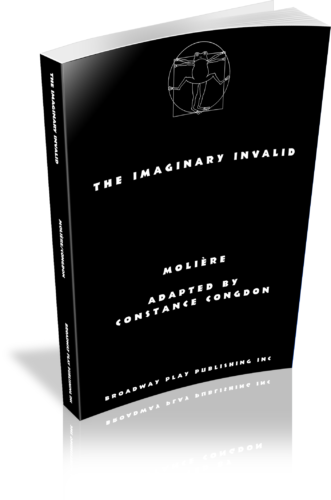
The Imaginary Invalid — Diafoirus
Molière, translated by Richard Nelson, Richard Pevear and Larissa Volokhonsky
Diafoirus: Monsieur, it is not because I am his father, but I may say that I have reason to be pleased with him, and that all who see him speak of him as a boy who has no wickedness in him. He has never had the lively imagination nor the sparkling wit that is to be found in some; but it is that which has always made me foresee the best for his good judgment, a quality called for in the exercise of our art. When he was little, he was never what’s known as sharp and alert. One always found him gentle, peaceful, and taciturn, never saying a word, and never playing at all those little things known as children’s games. We had all the trouble in the world teaching him to read, and at the age of nine he still hadn’t learned the alphabet. “Good,” I said to myself, “it’s the late trees that bear the best fruit; it’s much harder to carve in marble than in sand, but things last much longer in it, and this slowness of comprehension, this sluggishness of imagination, is the mark of good judgment to come.” When I sent him away to school, he had a hard time of it; but he braced himself against the difficulties, and his masters always praised him to me for his assiduousness and effort. At last, by hammering away, he arrived gloriously at attaining his diplomas; and I may say without vanity that for the two years that he has been a doctoral candidate, there is no student who has made more noise than he in all of our school’s debates. He has made himself formidable, and no act is passed in which he has not argued all out for the contrary proposition. He is firm in dispute, strong as a Turk on his principles, never budges an inch in his opinions, and pursues his argument to the last recesses of logic. But what pleases me above all in him, and here he follows my example, is that he is blindly attached to the opinions of our elders, and has never wished to understand or even hear about the arguments and experiments of the so-called discoveries of our age concerning the circulation of the blood and other opinions of the same ilk.