

Monologue
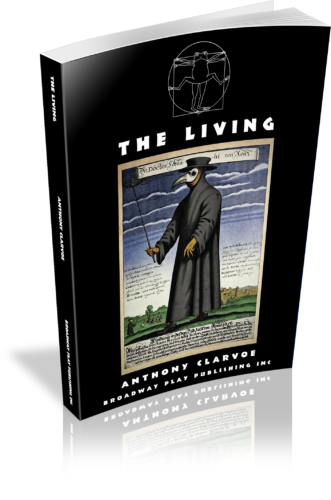
The Living — Graunt
Anthony Clarvoe
Graunt: People ask me what the plague looked like. It looks like this. You wander through a crowd of absences. Friends gone, of course, but more than that. The plague is a place where you search for strangers. Where are the crowds? I don’t know where I’m going without the crowds. They were my landmarks. The crowds in the morning, that was the Exchange. The crowds at noon, that was Westminster. The people milling about in the evening, that was Drury Lane. They told me I was somewhere. Where am I now? A long, open space. It used to be a street, but there’s nowhere to go, and no one passes, so what is it now? A narrow meadow, where cinders bloom. All around it stand great wooden crates. They had doors and windows once, but those are nailed shut, crosses painted on them. They are crates full of poisoned air, standing in the air. You say, I don’t know this place, I have to get out of here. I’ll go to the fields. I’ll stand in the crowds of grain, and I’ll know where I am. But when you walk to where the fields should be, the grain is gone. New hills are there, and new valleys. And this is where the crowds have gone. The surface of the earth can’t hold them all and the pits are full to bursting. The people are becoming the land, and the land has broken out in sores.
I wandered around the edge of that place, where London went into the ground. I have always gone where the crowds have gone. To be alive, in this place, feels somehow like a rude mistake. Something that just isn’t done anymore.
So as you walk, if you spot another living person, any other person in the world, your heart stands up, and dances. You want to run to that person, hold your heart against theirs, so your hearts can dance together. But you mustn’t, you mustn’t touch them, you mustn’t come close to them. So you wave wildly and call out, as if you were two little boats on the high sea of the plague, unable to approach for fear the waves would crash the two of you together and you would crush each other. And this is London now: a dry sea, laced with narrow channels, hemmed in by wooden rocks full of poisoned air, where you row the little boat of your body. And now and then you see a sail on the horizon, and you wave, and it waves back, and then you take up your oars again, rowing and rowing through the ashes.