

Monologue
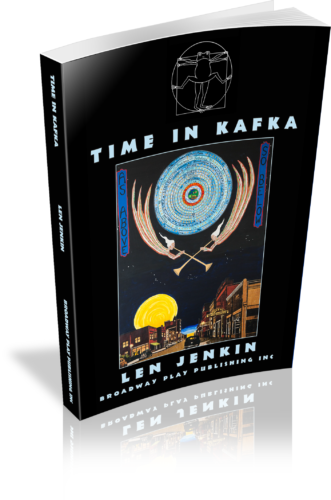
Time in Kafka — Sturdza
Len Jenkin
Sturdza: One evening many years ago, I went to the opera in Venice. I was with an Italian duke, handsome as a god, and just as wealthy. As the audience gathered in front of La Fenice, an old Chinese gentleman appeared, pulling a bamboo cage on wheels. In the cage was a black bear.
The old man took a long spoon and a jar of honey from under his robe and fed the bear, sliding the dripping spoon between the bars into the bear’s mouth. Then he opened the cage door. The bear shuffled out and stood up on its hindlegs. It wore a red cap. The man talked to it gently in Mandarin, then blew on a tiny flute. The bear swayed in place, then began a heavy-footed shuffle, side to side. The doors of La Fenice opened, we threw a few coins, and went inside.
I saw them again as I was leaving Venice. The duke had accused me of stealing an emerald necklace of his mother’s, and had called the police. I was embarking at twilight. The bear in its cage was being hoisted by dockside crane aboard my ship, a freighter sailing for Morocco and Cadiz.
The Chinese gentleman watched from the dock. Suddenly the cable snapped, and the caged bear plunged down into the black water. The old man howled in agony. The cage sank quickly. The red sun followed it slowly into the Venetian lagoon, and the first stars appeared in the darkening sky. The Chinese gentleman boarded the ship. We sailed off into the night and the Adriatic. I saw him at the rail near midnight. He took his long spoon out from under his robe, dipped it in the jar of honey, and tossed it into the sea.