


The Eric Overmyer Collection
Note
This bundle consisting of 12 books is sold at 20% off the regular price for its individual titles.$138.75
Original price was: $173.40.$138.75Current price is: $138.75.
Description
A marvelous collection of Eric Overmyer’s brilliant body of work.
Press Quotes
ALKI
“Writing skills unequalled among American playwrights, [a] brilliant wordsmith …” —Richard Stayton, Los Angeles Herald Examiner
“A cosmically inclined theatrical court jester.” —Mel Gussow, The New York Times
“Overmyer is a dazzling verbal acrobat, as well as a serious student of pop culture. Both linguist and cultural anthropologist …” —Michael Kuchwara, A P
AMPHITRYON
“The story of Jupiter’s cuckolding of Amphitryon has come in a variety of theatrical styles over the centuries. Plautus, by all accounts, had great success with it as a burlesque for the Romans; Molière turned it into a farce, of course; Kleist made a romance of it; and Giraudoux fashioned it into a fantasy. In the new version, Mr Overmyer seems to aim for the sophistication of a Saturday Night Live skit, a sort of Classics Comics for the theater.” —Wilborn Hampton, The New York Times
DARK RAPTURE
“Eric Overmyer [is] one of this nation’s most accomplished and vividly imaginative playwrights.” —Wayne Johnson, The Seattle Times
“In NATIVE SPEECH, ON THE VERGE and IN PERPETUITY THROUGHOUT THE UNIVERSE, Eric Overmyer manifested a extraordinary command over the tools of language: sound, syntax and image … In DARK RAPTURE, which premiered at Seattle’s Empty Space Theater in May, Overmyer’s verbal dexterity is acute as ever, but this time it’s harnessed to a plot delivered by characters who seem driven by purposes of their own. It’s by far Overmyer’s most satisfying play. DARK RAPTURE may not, however, earn its author the critical praise it deserves — it certainly didn’t in Seattle — because it adheres so strictly to the rules of the genre. In the written arts, in film, in dance, in pop music, a creative artist’s submission to such rules earns no disrespect. In theater, it seems we honor work created within rigid conventions only if the conventions are someone else’s: kabuki or kathakali, wayang or noh. DARK RAPTURE is ‘noir,’ the genre which crystallized in the 1940s novels and screenplays of Raymond Chandler and has intermittently borne fruit ever since in the hands of artists as various as Richard Condon and Wim Wenders. Good noir is rare on stage … But his DARK RAPTURE is the most successful stage essay in the form since Len Jenkins’s marvelous, poetic FIVE OF US. Like many noir fictions, DARK RAPTURE is about escape: from the self, from the sane, from the ordinary. This time the escape hatch is offered by a fire that leaves the Berkeley Hills home of Ray and Julia Gaines a pile of smoldering rubble with a charred and unrecognizable corpse beneath it. Whose corpse is it: Ray’s, or a looter’s? Just where was Julia when the house burned down? And what happened to the brown-paper parcel Julia says she left in Ray’s custody? Did it go up in flames, too, with or without him? Any number of sinister people want to know. In classic noir manner, the story advances tableau by moody tableau from Baja bedroom to Key West bar deck to Tampa kitchenette, each offering its sharply etched character cameo, its fragment of information, its new complication, straight to a conclusion redolent with irony …” —Roger Downey, American Theater
DON QUIXOTE DE LA JOLLA
“A cosmically inclined theatrical court jester.” —Mel Gussow, The New York Times
“Blissfully zany … it is mainly just a free-wheeling romp that takes off some of the characters, incidents, and ideas in Cervantes’s book. It is that form of comedy, known as burlesque or travesty, which achieves its humor by the low and ridiculous transformation of a loftier subject. (Actually, since the original DON QUIXOTE was itself a burlesque of medieval romances, DON QUIXOTE DE LA JOLLA is in effect a travesty of a travesty.) More accurately, DON QUIXOTE DE LA JOLLA is not so much a burlesque of the original book (which few people read anyway) but of the image of the book in the mass mind as fostered by other adaptations, most significantly MAN OF LA MANCHA … DON QUIXOTE DE LA JOLLA is, then, a headlong, hectic, hilarious rush, a frantic comic phantasmagoria on Quixotic themes, that needs no scholar annotations; it is great good fun.” —George Weinberg-Harter, Drama-Logue
DUKE KAHANAMOKU VS THE SURFNAPPERS
“… Duke was the man. The play [is] essentially a not-so-thinly-disguised homage to his amazingly rich and humble life, from early Olympic beginnings to an acting career in Hollywood, to being sheriff of Honolulu, to returning home and basking in the role of Hawaii’s cultural ambassador … ‘Here was a man who was as important to the people of Hawaii as Michael Jordan was to Chicagoans.’ But we’re not talking some dusty history lecture … Who could resist getting sucked into such a timeless fable? Duke’s statue in Waikiki comes to life when it’s discovered that Hawaii’s surf has been missing for two weeks; the ocean’s ‘like glass,’ the groms say. This is no average flat spell, he realizes as the ultra evil Mr Double Bogey has plans to turn the entire Hawaiian Island chain into the world’s biggest golf course and convention center. Bogey’s holding the surf hostage and won’t give it back until Duke presents him with all Hawaii’s land deeds. So — in between historically informative monologues detailing Duke’s life — the good guys go looking for the surf, literally …” —Marcus Sanders, Surf News
FIGARO/FIGARO
“Ödön von Horváth’s magnificent 1936 FIGARO GETS A DIVORCE was conceived as a modern sequel to Beaumarchais’s 1784 classic THE MARRIAGE OF FIGARO and, naturally, has always invited comparison to the earlier work. In presenting the two in tandem, director Stan Wojewodski and adaptor Eric Overmyer have made the comparison easy and enjoyable and, remarkably, have created a single piece that occasionally shimmers with inspiration, acquiring an independent artistic identity.” —Jonathan Kalb, The Village Voice
“One of the more provocative productions to be seen in the last days of 1994 was the Yale Repertory Theatre’s FIGARO/FIGARO … a project that deserves more productions. It’s full of rich possibilities.” —Vincent Canby, The New York Times
THE HELIOTROPE BOUQUET BY SCOTT JOPLIN AND LOUIS CHAUVIN
“Eric Overmyer is not a playwright who does things simply, so it’s probably not enough to say that his latest theatrical conceit, THE HELIOTROPE BOUQUET BY SCOTT JOPLIN AND LOUIS CHAUVIN is a dream play. It’s really three dreams wrapping themselves around one another like languid tendrils of opium smoke stirred by a ceiling fan. The first dreamer is Scott Joplin, widely heralded as the king of the ragtime composers, although when we initially meet him, slumped over a piano by the dim light of a Harlem morning, fame and inspiration are behind him, and his tortured mind is obsessed with sultry images of the ‘poxy girls’ in the House of Blue Light, a New Orleans sporting house he frequented as a youth. The second, more impertinent, dreamer is Louis Chauvin — Joplin’s match, if not his better, in the art of syncopation — who had the misfortune (or the contrariness) to leave nothing behind him when he died of multiple sclerosis at twenty-six. The only concrete evidence of his genius is Heliotrope Bouquet, the slow drag two-step he wrote with Joplin, who saw to it that the sheet music got published. The third dreamer is Mr Overmyer himself, who has seized upon this fleeting collaboration and its few tangible details as the pretext for some graceful musings about the ephemeral nature of art and reputation …” —David Richards, The New York Times
“Resounding with the bittersweet mood and slow grace of the ragtime music it celebrates, Eric Overmyer’s THE HELIOTROPE BOUQUET BY SCOTT JOPLIN AND LOUIS CHAUVIN is an elegiac fever dream of a play, a skillful weaving of fact and fancy played against a backdrop of memory, loss and the redemptive power of art … Overmyer’s insertion of fantastical elements into conventional narrative has been used to comic, or at least whimsical, effect before, notably in his ON THE VERGE, OR THE GEOGRAPHY OF YEARNING. But in HELIOTROPE, the playwright spins this technique into a poignant composition peppered with moments of joyful release … Overmyer’s rich, clever dialogue gives the play a sumptuous feel … Running under an hour and a half, HELIOTROPE is less like the ambitious ragtime opera that consumed Joplin’s final years than the brief but startling collaboration that gives the play its name. Ending on a tentative note of hope and revival, Overmyer adheres to Joplin’s musical tenet of ‘sweet resolution’ even as the cynical Chauvin’s admonition lingers: ‘Sweet resolution,’ he tells Joplin, ‘is the difference between music and life.’” —Greg Evans, Variety
IN A PIG’S VALISE
“IN A PIG’S VALISE is a musical comedy spoof of the hot-cool private-eye pulp fiction associated with Raymond Chandler and Dashiell Hammett. Except that it’s wilder, much wilder. VALISE, among other oddities, features a stubby villain named Shrimp Bucket, an ‘ethnic dancer’ heroine named Dolores Con Leche (or, as the gumshoe hero, James Taxi, calls her, Sadness With Milk) and, in a bit part homage to Hammett’s real-life lover, an undercover FBI agent named Lillian Hellman … Spiced with songs by August Darnell (Kid Creole) that bear such lines as ‘Kiss Me Deadly’ and ‘Never Judge a Thriller by Its Cover’ … [a] broad, winking satire of the language and plot conventions of the old books and movies … Shattered Globe Theatre, which is presenting the Midwest premiere of VALISE … has a lot of fun with this kind of material.” —Richard Christiansen, The Chicago Tribune
IN PERPETUITY THROUGHOUT THE UNIVERSE
“Paranoia produces profits in the dark, dangerous world created by Eric Overmyer’s IN PERPETUITY THROUGHOUT THE UNIVERSE, a strange, sinister comedy … Overmyer is a dazzling verbal acrobat as well as a serious student of pop culture. Both linguist and cultural anthropologist get a workout here … A darker expedition, probing the fears and prejudices of society. Overmyer makes it a wild unnerving ride.” —Michael Kuchwara, A P
“One of the most fascinating new scripts I’ve encountered in recent years … Overmyer’s intellectually nimble play does not yield to easy summary, but, in brief, it deals with bright young adults who ghost-write hatebooks for powerful bigots. Such is Overmyer’s tricky dramaturgy that four members of the cast play both Good Guys and Bad Guys … it deserves to find its way to the stages of many resident professional theaters.” —Wayne Johnson, Seattle Times
“Thanks to writing skills unequalled among American playwrights, brilliant wordsmith Eric Overmyer transforms all this paranoia into a theatrical witch-hunt titled IN PERPETUITY THROUGHOUT THE UNIVERSE … Overmyer speaks from the heart of the Twentieth Century.” —Richard Stayton, Los Angeles Herald Examiner
MI VIDA LOCA
“With a handful of plays … Eric Overmyer has established himself as one of contemporary theater’s wittiest playwrights.” —Jan Stuart, Seven Days
“Eric Overmyer [is] one of this nation’s most accomplished and vividly imaginative playwrights.” —Wayne Johnson, The Seattle Times
NATIVE SPEECH
“Down at the bottom of your radio dial is a station with a weak signal but a strong message. The man behind the message calls himself Hungry Mother, and he’s a disc jockey with a difference. In NATIVE SPEECH, the difference is playwright Eric Overmyer’s chilling vision of a society about to go belly up … NATIVE SPEECH shapes its ideas through a network of rich visual and verbal images rather than resorting to logic. Overmyer has created a wonderful hip language for Hungry to speak, and it never dies in his mouth no matter how surreal the psychic terrain through which we move. As in all good cautionary tales, the unspoken word behind the story is: beware.” —Jay Reiner, Los Angeles Herald-Examiner
ON THE VERGE OR THE GEOGRAPHY OF YEARNING
“Cross the wordplay of S J Perelman with the world-in-a-time-warp vision of Caryl Churchill and you might approximate the special flavor of ON THE VERGE. In Eric Overmyer’s chimerical new comedy, three Victorian lady explorers set out on an adventure that takes them to darkest Africa, highest Himalaya and Terra Incognita … Blending Tom Stoppard’s limber linguistics with the historic overview of a Thornton Wilder, Mr Overmyer takes his audience on a mirthful safari … spinning into time travel. Three ‘sister sojourners’, each a prototypical Victorian lady explorer, equipped with dialog as pithy as their helmets, thwack their machetes through the wilderness while telling tales of past jaunts among the natives. As intrepid trekkers, they put the lie to any charge that they are representatives of a weaker sex. Mr Overmyer has written a play that is joyfully feminist. Heroines to their heart, the explorers can accommodate themselves to any emergency (natural or man-made), although they are momentarily disoriented as they approach modern times. In their kaleidoscopic adventure, they journey through a rain forest of hundreds of artifacts from the future — household utensils, mechanical contrivances and a side-view automobile mirror that reads ‘Objects in mirror may be closer than they appear.’ How does one deal with such a chimera? … In the play there is wit within the palaver. As one traveler says, ‘I have seen the future and it is slang.’ The author himself is an ecologist of language and a shrewd observer of our quest to control our environment — and the environment of others … A frolicsome jaunt through a continuum of space, time, history, geography, feminism and fashion, Mr Overmyer’s cavalcade is on the verge of becoming a thoroughly serendipitous journey.” —Mel Gussow, The New York Times
Author
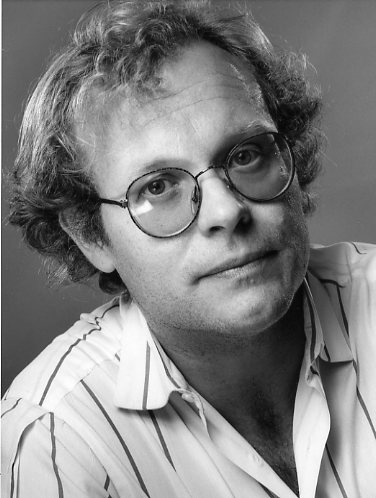 Eric Overmyer
Eric Overmyer was a playwright and a television writer and producer. He graduated as a theater major from Reed College in 1973. His plays include ON THE VERGE, THE HELIOTROPE BOUQUET, IN A PIG'S VALISE, DON QUIXOTE DE LA JOLLA, NATIVE SPEECH, MI VIDA LOCA, IN PERPETUITY THROUGHOUT THE UNIVERSE, and DARK RAPTURE. Mr Overmyer has written extensively for television, including for Homicide: Life on the Street, The Wire and Law & Order, and has been nominated for two Emmy Awards. He received an Edgar Award for the television feature Rear Window. Overmyer was also a co-creator of the HBO series Treme, about musicians in post-Katrina New Orleans. He passed away in 2026.